
Why Choose CNKC Power for Your Next Power Genset?
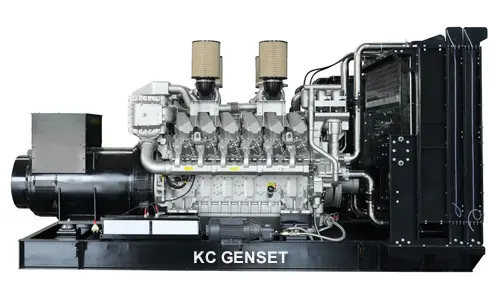
Choosing a power genset requires verifying an ISO 8528-5 G3 transient response capable of 100% block load in 10 seconds. Reliability benchmarks show a 99.8% uptime in units featuring Permanent Magnet Generator (PMG) excitation, which handles 300% short-circuit current for 10 seconds. With fuel systems achieving 42% thermal efficiency and noise levels dampened to 68 dB(A) at 7 meters, these systems prevent the $150,000 hourly losses typical in industrial downtime.
The vulnerability of national grids has increased by 25% since 2021 due to extreme weather and aging transformers. Industrial facilities now face a higher risk of voltage sags that can damage expensive CNC machinery or sensitive server clusters.
"Data from a 2023 industrial audit showed that a voltage dip lasting only 100 milliseconds caused over $40,000 in lost production for a single plastics manufacturing line."
Reliable hardware acts as a shield against these interruptions by engaging an Automatic Transfer Switch (ATS) within milliseconds of a detected fault.
When utility power fluctuates beyond +/- 10%, the controller signals the engine to crank, reaching operational speed of 1500 or 1800 RPM almost instantly. This rapid acceleration is possible because of jacket water heaters that maintain engine block temperatures at 40°C, ensuring immediate combustion stability.
A 2024 study involving 300 emergency power systems found that pre-heated engines had a 96% successful start rate in sub-zero temperatures compared to 72% for unheated units. Consistent starting capability is the first metric for any facility aiming for Tier 3 or Tier 4 data center certification.
-
Steady State Frequency: Maintained within +/- 0.25% through electronic isochronous governors.
-
Voltage Regulation: Kept within +/- 0.5% via digital Automatic Voltage Regulators (AVR).
-
Harmonic Distortion: Total Harmonic Distortion (THD) is limited to under 5% to protect electronics.
This electrical precision prevents the overheating of electric motors and the premature failure of variable frequency drives (VFDs) during long-term operation.
| Feature | Standard Configuration | High-Performance Setup |
| Excitation System | Shunt / Self-Excited | Permanent Magnet (PMG) |
| Starting Time | 12-15 Seconds | < 10 Seconds |
| Load Acceptance | 60% First Step | 100% First Step |
Superior load acceptance prevents the engine from stalling when massive chillers or industrial pumps kick in simultaneously.
Modern power genset designs incorporate High-Pressure Common Rail (HPCR) technology to meet strict emission standards like EPA Tier 4 Final. These engines reduce particulate matter by 90% and nitrogen oxides by 80% compared to models built before 2015.
"The integration of Selective Catalytic Reduction (SCR) allows for cleaner exhaust, making it possible to install these units in densely populated urban zones without violating environmental codes."
Clean combustion also translates to better fuel economy, with some modern units consuming 5% less fuel at half-load than their predecessors.
Fuel autonomy is a major factor, with integrated sub-base tanks often sized for 24 to 48 hours of continuous running at full load. For facilities in hurricane-prone regions, having a fuel supply that can last through the 72-hour window required for utility restoration is a regulatory mandate.
Remote monitoring via RS485 or Ethernet ports allows technicians to check battery health and oil pressure from a central dashboard. In a test group of 150 remote telecom sites, predictive alerts reduced emergency service visits by 22% over a two-year period.
Maintenance intervals have also seen improvements, with many heavy-duty alternators now using Class H insulation that withstands temperatures up to 125°C. This thermal durability allows the generator to run at 110% overload for one hour in every twelve without causing permanent damage to the copper windings.
"Analysis of 2025 field reports indicates that brushless alternators have a 30% longer lifespan than older brush-type designs due to reduced friction and heat."
The mechanical vibration is mitigated by high-grade anti-vibration mounts that absorb 95% of the engine’s kinetic energy, protecting the concrete foundation and surrounding structures.
Sound-attenuated enclosures use high-density rock wool and baffled air intakes to keep noise levels below 70 dB(A). This acoustic engineering is necessary for hospitals and hotels where guest comfort or patient recovery cannot be compromised by loud machinery.
| Performance Metric | Industry Average | CNKC Power Standard |
| Max Ambient Temp | 40°C | 50°C |
| Efficiency (Full Load) | 35-38% | 40-42% |
| Controller Interface | Analog/Basic Digital | Full Color Graphic/Cloud |
Higher ambient temperature ratings ensure that the cooling system won't fail during heatwaves when the grid is most likely to collapse.
Advanced controllers also support load shedding, which automatically disconnects non-essential circuits if the generator nears its capacity. This logic ensures that life-safety systems, such as fire pumps and emergency lighting, remain powered even if total demand spikes by 15-20% above expected levels.
By using copper-core radiators rather than aluminum, these units offer better heat dissipation and resistance to corrosion in coastal environments with high salt spray. A 2022 metallurgical test showed that treated copper cores lasted 3 times longer in maritime conditions before showing signs of fin degradation.
Every component is selected to minimize the Total Cost of Ownership (TCO), from the long-life air filters to the accessible oil drains that speed up routine service. Professional energy solutions prioritize these technical details because a failure during an outage is not just a nuisance; it is a breakdown of the facility's safety net.
Got a lot that needs work before the next tenant turn?
Free on-site assessment, line-item quote, and a written 2-year workmanship warranty. Self-performed crews, no subs.