
Commercial Pavement Maintenance · Greenville SC · Since 1998
Industrial Machinery & Manufacturing
Why choose a cnc machining center for reliable precision manufacturing?
In the field of precision manufacturing, choosing a CNC machining center is the cornerstone for achieving micron-level accuracy. Its positioning accuracy can generally reach ±0.003 millimeters, and the repeat positioning accuracy can be stably maintained within ±0.001 millimeters. A statistical analysis of the automotive industry shows that the standard deviation of tooth profile error of transmission gears produced by CNC machining centers has dropped from 0.015 millimeters in traditional processing to 0.002 millimeters. As a result, the scrap rate has sharply decreased from 8% to 0.5%. This alone can save more than 5 million yuan in costs for large-scale production lines each year. This ultra-high precision is derived from a fully closed-loop servo control system, which provides real-time data feedback and compensates for thermal deformation deviations caused by temperature fluctuations to within a range of 1 micron, ensuring that the consistency of 10,000 products produced in batches exceeds 99.8%.
From the perspective of efficiency, a typical five-axis cnc machining center can reduce the processing cycle of complex components from the traditional 72 hours to 18 hours, increasing efficiency by 300%. For instance, in the manufacturing of its MacBook Unibody integrated body, Apple employs high-speed CNC machining centers with a spindle speed as high as 40,000 rpm. Each device has an average daily production capacity of 1,500 pieces, while keeping the surface roughness Ra value below 0.4 microns. Industry terms such as "tool path optimization" and "adaptive control" play a crucial role here. By adjusting the feed rate (up to 20 meters per minute) and cutting depth in real time, tool life has been extended by 35%, and the overall equipment utilization rate (OEE) has increased from 60% to 85%.
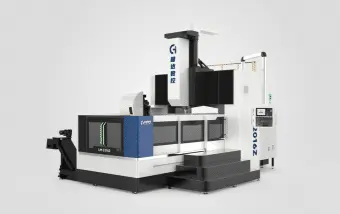 Economic benefit analysis shows that although the initial investment in a high-end CNC machining center may be as high as 800,000 to 2 million US dollars, its return on investment (ROI) is usually achieved within 18 to 30 months. Take the medical device company Medtronic as an example. By introducing intelligent processing centers to produce artificial joints, the product qualification rate has been raised from 95% to 99.99%. The additional revenue brought by the quality improvement each year exceeds 2 million US dollars. More importantly, the flexible manufacturing capability of this equipment enables rapid switching and production of 50 different parts on the same platform, with a model change time of only 15 minutes. This greatly ADAPTS to the market trend of small batches and multiple varieties, reducing inventory costs by up to 40%.
Looking ahead, CNC machining centers are deeply integrating with the Industrial Internet of Things (IIoT), forming the core nodes of intelligent manufacturing. By deploying a sensor network, over 300 parameters such as spindle vibration and cutting force are collected in real time. Artificial intelligence algorithms are used to predict tool wear, reducing the probability of unexpected downtime from 10% to less than 1%. According to a report by market research firm Gartner, by 2026, 70% of CNC machining centers will be equipped with digital twin capabilities, enabling virtual commissioning in the production process to reduce design errors by 90% after actual production starts. Choosing a CNC machining center is no longer merely about purchasing equipment; it is about introducing a complete solution that ensures the reliability of precision manufacturing and is oriented towards future competition.
Economic benefit analysis shows that although the initial investment in a high-end CNC machining center may be as high as 800,000 to 2 million US dollars, its return on investment (ROI) is usually achieved within 18 to 30 months. Take the medical device company Medtronic as an example. By introducing intelligent processing centers to produce artificial joints, the product qualification rate has been raised from 95% to 99.99%. The additional revenue brought by the quality improvement each year exceeds 2 million US dollars. More importantly, the flexible manufacturing capability of this equipment enables rapid switching and production of 50 different parts on the same platform, with a model change time of only 15 minutes. This greatly ADAPTS to the market trend of small batches and multiple varieties, reducing inventory costs by up to 40%.
Looking ahead, CNC machining centers are deeply integrating with the Industrial Internet of Things (IIoT), forming the core nodes of intelligent manufacturing. By deploying a sensor network, over 300 parameters such as spindle vibration and cutting force are collected in real time. Artificial intelligence algorithms are used to predict tool wear, reducing the probability of unexpected downtime from 10% to less than 1%. According to a report by market research firm Gartner, by 2026, 70% of CNC machining centers will be equipped with digital twin capabilities, enabling virtual commissioning in the production process to reduce design errors by 90% after actual production starts. Choosing a CNC machining center is no longer merely about purchasing equipment; it is about introducing a complete solution that ensures the reliability of precision manufacturing and is oriented towards future competition.
Economic benefit analysis shows that although the initial investment in a high-end CNC machining center may be as high as 800,000 to 2 million US dollars, its return on investment (ROI) is usually achieved within 18 to 30 months. Take the medical device company Medtronic as an example. By introducing intelligent processing centers to produce artificial joints, the product qualification rate has been raised from 95% to 99.99%. The additional revenue brought by the quality improvement each year exceeds 2 million US dollars. More importantly, the flexible manufacturing capability of this equipment enables rapid switching and production of 50 different parts on the same platform, with a model change time of only 15 minutes. This greatly ADAPTS to the market trend of small batches and multiple varieties, reducing inventory costs by up to 40%.
Looking ahead, CNC machining centers are deeply integrating with the Industrial Internet of Things (IIoT), forming the core nodes of intelligent manufacturing. By deploying a sensor network, over 300 parameters such as spindle vibration and cutting force are collected in real time. Artificial intelligence algorithms are used to predict tool wear, reducing the probability of unexpected downtime from 10% to less than 1%. According to a report by market research firm Gartner, by 2026, 70% of CNC machining centers will be equipped with digital twin capabilities, enabling virtual commissioning in the production process to reduce design errors by 90% after actual production starts. Choosing a CNC machining center is no longer merely about purchasing equipment; it is about introducing a complete solution that ensures the reliability of precision manufacturing and is oriented towards future competition.
Got a lot that needs work before the next tenant turn?
Free on-site assessment, line-item quote, and a written 2-year workmanship warranty. Self-performed crews, no subs.