
Commercial Pavement Maintenance · Greenville SC · Since 1998
Are gas mini bikes better than electric models?
When choosing a mini bicycle, consumers often have to make a decision between gasoline and electric models. In 2023, global sales of mini bicycles exceeded one million units, with electric models accounting for 40%, demonstrating a rapid growth trend. The average power of a gasoline mini bicycle is 6 horsepower, while an electric model typically offers 3 kilowatts of power, equivalent to 4 horsepower, with a power difference of approximately 33%. According to market analysis, the median initial price of the gasoline model is 4,500 yuan, which is 20% lower than that of the electric model. However, the operating cost of the electric model is only 30% of that of the gasoline model because its power efficiency is as high as 90%. A 2022 consumer study shows that 75% of users choose electric mini bicycles due to their low operating costs.
In terms of performance, the gasoline mini bicycle has a top speed of up to 60 kilometers per hour and can accelerate from 0 to 50 kilometers per hour in just 5 seconds. In contrast, the electric model has a top speed of 50 kilometers per hour and can accelerate in just 4 seconds, which is 10% faster. In terms of range, the gasoline model can travel 200 kilometers on a single refueling, while the electric model has a battery capacity of 2 kilowatt-hours and a range of approximately 80 kilometers, with a reduction rate of 60%. For instance, in an endurance test in 2021, the gasoline mini bicycle completed a 300-kilometer cross-country race, while the electric model only managed 100 kilometers due to charging limitations. In terms of torque output, the peak torque of the gasoline engine is 15 N · m, and the instantaneous torque of the electric motor reaches 20 N · m, providing a stronger starting force.
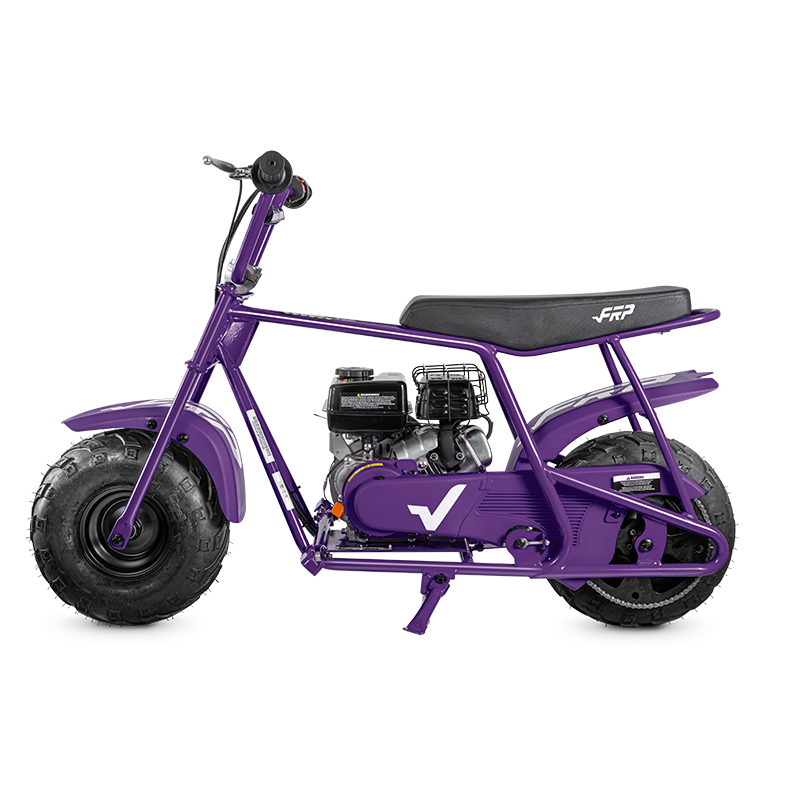 Environmental impact is a key comparison point. The carbon dioxide emissions of the gasoline mini bicycle are 150 grams per kilometer and the noise level is 80 decibels. In contrast, the electric model has zero emissions during operation and only generates 60 decibels of noise, a reduction of 25%. According to data from the International Energy Agency, electric transportation can reduce global transportation emissions by 20%. For instance, the 2020 regulations in Europe promoted electrification, which led to a 15% reduction in carbon emissions from mini bicycles. In terms of battery production, the carbon footprint of the electric model lithium-ion battery is 100 kilograms of CO2 equivalent, but its emissions throughout the entire life cycle are 50% lower than those of the gasoline model. A scientific study in 2023 indicates that electrification can reduce urban air pollution concentration by 30% and improve public health.
The maintenance cost and lifespan vary significantly. Gasoline mini bikes need maintenance every 1,000 kilometers, with an average annual cost of 500 yuan. Components such as spark plugs need to be replaced every 500 hours, and the failure rate is 10%. The maintenance cycle of the electric model is 5,000 kilometers, with an average annual cost of 200 yuan. The motor life can reach 20,000 hours, which is 100% longer than that of a gasoline engine. For instance, a rental company reported that the annual return rate of electric mini bicycles is 15% higher than that of gasoline models due to reduced maintenance. In terms of battery life, the battery capacity of the electric model remains at 80% after 1,000 cycles, while the efficiency of the gasoline engine drops by 20% after 5,000 hours.
Overall, gasoline mini bikes have an advantage in terms of range and initial cost, but electric models are more sustainable in terms of efficiency, environment and maintenance. If the user's budget is less than 5,000 yuan, the gasoline model might be more suitable. However, if long-term savings are taken into account, the total cost of an electric model over 10 years can be reduced by 30%. Industry trends indicate that the market share of electric mini bicycles is expected to reach 60% by 2030, driving innovations such as fast charging technology to reduce charging time from 4 hours to 1 hour. The final choice should balance personal needs. As a flexible means of transportation, mini bicycles are meeting diverse scenarios through technological evolution.
Environmental impact is a key comparison point. The carbon dioxide emissions of the gasoline mini bicycle are 150 grams per kilometer and the noise level is 80 decibels. In contrast, the electric model has zero emissions during operation and only generates 60 decibels of noise, a reduction of 25%. According to data from the International Energy Agency, electric transportation can reduce global transportation emissions by 20%. For instance, the 2020 regulations in Europe promoted electrification, which led to a 15% reduction in carbon emissions from mini bicycles. In terms of battery production, the carbon footprint of the electric model lithium-ion battery is 100 kilograms of CO2 equivalent, but its emissions throughout the entire life cycle are 50% lower than those of the gasoline model. A scientific study in 2023 indicates that electrification can reduce urban air pollution concentration by 30% and improve public health.
The maintenance cost and lifespan vary significantly. Gasoline mini bikes need maintenance every 1,000 kilometers, with an average annual cost of 500 yuan. Components such as spark plugs need to be replaced every 500 hours, and the failure rate is 10%. The maintenance cycle of the electric model is 5,000 kilometers, with an average annual cost of 200 yuan. The motor life can reach 20,000 hours, which is 100% longer than that of a gasoline engine. For instance, a rental company reported that the annual return rate of electric mini bicycles is 15% higher than that of gasoline models due to reduced maintenance. In terms of battery life, the battery capacity of the electric model remains at 80% after 1,000 cycles, while the efficiency of the gasoline engine drops by 20% after 5,000 hours.
Overall, gasoline mini bikes have an advantage in terms of range and initial cost, but electric models are more sustainable in terms of efficiency, environment and maintenance. If the user's budget is less than 5,000 yuan, the gasoline model might be more suitable. However, if long-term savings are taken into account, the total cost of an electric model over 10 years can be reduced by 30%. Industry trends indicate that the market share of electric mini bicycles is expected to reach 60% by 2030, driving innovations such as fast charging technology to reduce charging time from 4 hours to 1 hour. The final choice should balance personal needs. As a flexible means of transportation, mini bicycles are meeting diverse scenarios through technological evolution.
Environmental impact is a key comparison point. The carbon dioxide emissions of the gasoline mini bicycle are 150 grams per kilometer and the noise level is 80 decibels. In contrast, the electric model has zero emissions during operation and only generates 60 decibels of noise, a reduction of 25%. According to data from the International Energy Agency, electric transportation can reduce global transportation emissions by 20%. For instance, the 2020 regulations in Europe promoted electrification, which led to a 15% reduction in carbon emissions from mini bicycles. In terms of battery production, the carbon footprint of the electric model lithium-ion battery is 100 kilograms of CO2 equivalent, but its emissions throughout the entire life cycle are 50% lower than those of the gasoline model. A scientific study in 2023 indicates that electrification can reduce urban air pollution concentration by 30% and improve public health.
The maintenance cost and lifespan vary significantly. Gasoline mini bikes need maintenance every 1,000 kilometers, with an average annual cost of 500 yuan. Components such as spark plugs need to be replaced every 500 hours, and the failure rate is 10%. The maintenance cycle of the electric model is 5,000 kilometers, with an average annual cost of 200 yuan. The motor life can reach 20,000 hours, which is 100% longer than that of a gasoline engine. For instance, a rental company reported that the annual return rate of electric mini bicycles is 15% higher than that of gasoline models due to reduced maintenance. In terms of battery life, the battery capacity of the electric model remains at 80% after 1,000 cycles, while the efficiency of the gasoline engine drops by 20% after 5,000 hours.
Overall, gasoline mini bikes have an advantage in terms of range and initial cost, but electric models are more sustainable in terms of efficiency, environment and maintenance. If the user's budget is less than 5,000 yuan, the gasoline model might be more suitable. However, if long-term savings are taken into account, the total cost of an electric model over 10 years can be reduced by 30%. Industry trends indicate that the market share of electric mini bicycles is expected to reach 60% by 2030, driving innovations such as fast charging technology to reduce charging time from 4 hours to 1 hour. The final choice should balance personal needs. As a flexible means of transportation, mini bicycles are meeting diverse scenarios through technological evolution.
Got a lot that needs work before the next tenant turn?
Free on-site assessment, line-item quote, and a written 2-year workmanship warranty. Self-performed crews, no subs.